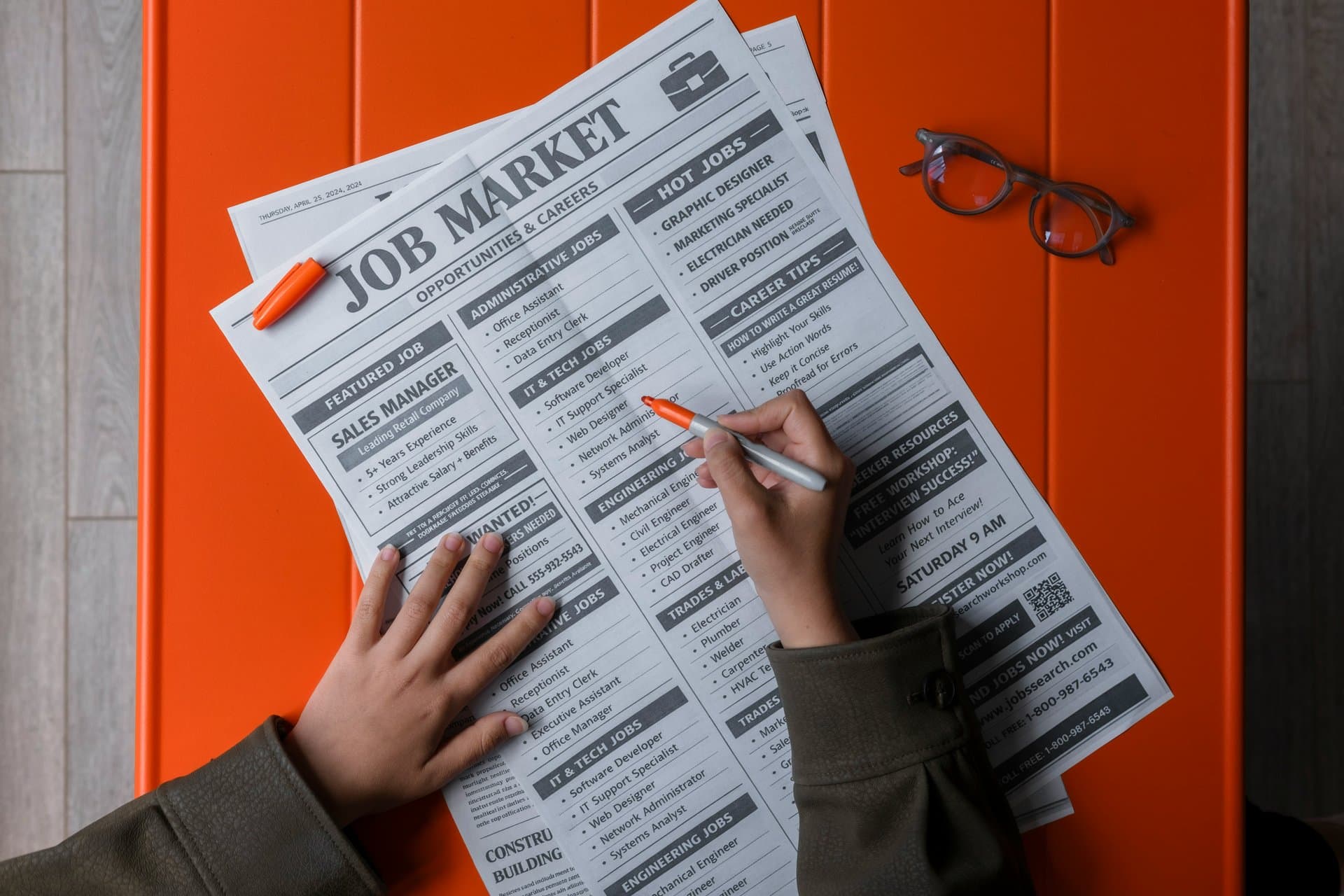
The skilled labor shortage in Switzerland is often one of the biggest challenges for companies. Open positions remain vacant for months, while at the same time fewer and fewer candidates are actively looking for jobs.
The skilled labor shortage in Switzerland has changed in recent years. While it is less present in the media than before, this does not mean it has disappeared. On the contrary: the labor market in 2026 is in a phase of transformation. At first glance, rising unemployment figures may appear to signal relief, but at the same time many positions remain unfilled. This very tension makes the issue more complex today than ever before.
The most important figures: A labor market in balance or imbalance?
A look at current data shows a differentiated picture:
· The unemployment rate in 2026 is around 3.2%
· At the same time, more than 48,000 open positions were registered with the RAV in February 2026
· Overall, more than 235,000 people are registered as job seekers
These figures show: there are both many open positions and many job seekers at the same time. The skilled labor shortage is therefore less a quantity problem and above all a matching problem.
Long-term developments also confirm this shift:
The Skilled Labor Shortage Index has recently declined and moved closer again to pre-pandemic levels. At the same time, shortages remain in specific sectors such as healthcare, construction and technical professions.
The causes: Why skilled workers are missing despite applicants
Demographic change as a structural driver
One of the main causes remains the aging population. According to a survey of economists, 87% see demographic change as the main reason for the skilled labor shortage.
More and more skilled workers are leaving the labor market, while fewer young people are entering it. This effect will continue to intensify in the coming years.
Skill gap: When qualifications and jobs do not match
A central problem is the lack of fit between requirements and skills. 63% of experts see this as a major cause.
While companies are looking for specialized competencies, many applicants do not possess these exact skills. This becomes particularly visible in the contrast between overcrowded office jobs and unfilled technical or skilled trade positions.
Structural change through technology and AI
Technological developments are significantly changing the labor market. According to analyses by KOF, the use of AI in particular has led to shifting requirements and certain jobs disappearing or changing.
At the same time, new roles are emerging for which there are not yet enough qualified specialists. The skilled labor shortage is therefore shifting rather than disappearing.
Limited access to international talent
Another factor is access to the international labor market. 43% of surveyed economists see this as a relevant cause.
Especially in specialized fields, companies depend on skilled workers from abroad. When this access is restricted, the shortage intensifies further.
What helps now: Solutions for companies
Rethink recruiting: Move away from simply filling positions
Companies need to approach recruiting more strategically. It is no longer enough to publish vacancies and wait for applications. Successful companies clearly define which target groups they want to reach and how to address them. Recruiting is therefore becoming an active discipline instead of a reactive one.
Digital solutions such as two.jobs support this transformation by enabling companies to strategically reach candidates across different channels and build reach effectively.
Focus on skills instead of resumes
The traditional resume is losing importance. Instead, concrete skills and potential are becoming more relevant. Companies that rely more strongly on skills-based approaches expand their talent pool and reduce the impact of matching problems.
Radically simplify application processes
An often underestimated lever is the application process itself. Complex procedures lead candidates to drop out even when there is genuine interest.
Simple, fast and mobile applications are now a decisive success factor in recruiting. The advantages of innovative application channels are summarized in this blog post.
Reach target groups where they actually are
The skilled labor shortage is also a reach problem. Many companies still communicate through the wrong channels. The key is to address the target group where they actually spend time, whether on social media, in networks or through new digital formats.
Holistic solutions instead of isolated measures
Individual measures are often not enough. Especially in the context of the skilled labor shortage, it becomes clear that isolated recruiting measures rarely have a sustainable effect.
Platforms such as two.jobs combine reach, data-driven targeting and optimized candidate journeys into an integrated approach. Reach, audience targeting and simplified application processes are combined into a system that not only creates visibility, but also actually generates applications.
Conclusion
The skilled labor shortage in Switzerland in 2026 is less an acute quantity problem than a structural matching problem. The figures clearly show that there are both open positions and available workers, but they are not finding each other.
The causes lie in demographics, qualification gaps and a changing labor market. At the same time, these very changes also create opportunities. Companies that think strategically about recruiting, simplify processes and adopt new approaches in communication can clearly differentiate themselves in the competition for talent.
Solutions such as two.jobs help companies actively address this matching problem by reaching the right candidates and simplifying the path to application. The decisive factor is no longer whether skilled workers exist, but how well companies can reach, convince and recruit them.
Sources
· The labor market situation February 2026
· Adecco: Skilled Labor Shortage Index Switzerland 2025
· SME Portal: Labor shortage in Switzerland is increasing
· ETH Zurich: How demographics and AI are changing the Swiss labor market